Where can I Park in the Cottonwood Canyons in the Summer?
Updated:
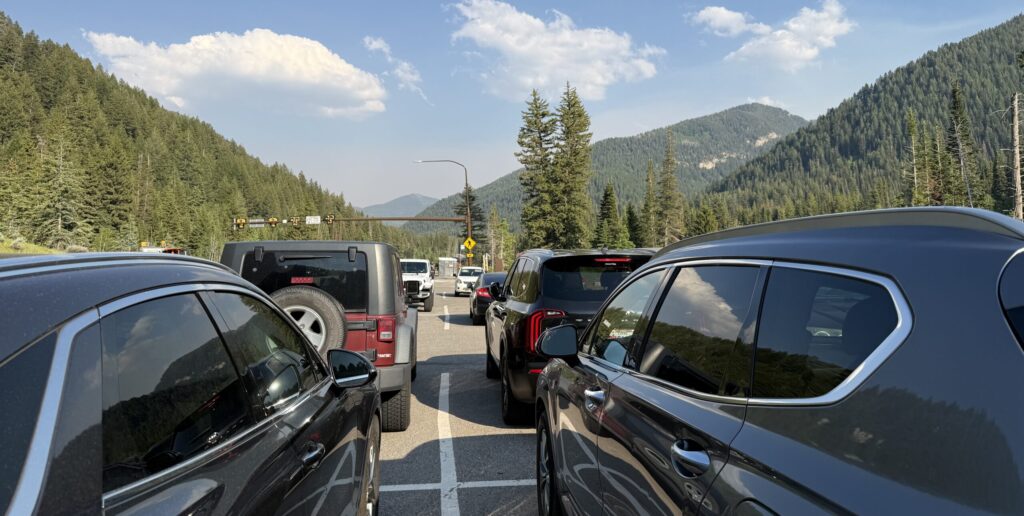
If you’re heading up into the Cottonwood Canyons this summer, a little parking know-how goes a long way. Between limited roadside spots, designated fee areas, and folks racing to escape the valley heat, planning ahead is the key to spending more time on the trail and less time looking for a parking spot.
Before you go, check our road information page for live traffic cameras, many showing trailhead parking, and current road conditions. In this guide, we’ll walk through the most commonly asked questions about summer parking in Big and Little Cottonwood Canyon.
Where Can I Park in the Cottonwood Canyons?
Day-use Parking Options
Parking in Big and Little Cottonwood Canyons is spread out across trailheads, roadside pull-offs, and a few larger developed areas. Your parking strategy depends on where you’re headed and what time you’re planning on visiting.
As you can imagine, weekends are the busiest days and the early morning and evenings (when it’s cooler) are the busiest times.
Forest Service Trailhead Parking Areas
Forest Service trailheads provide parking throughout both canyons. These parking areas provide access to popular recreation spots, such as hiking trails and climbing routes.
Where are the Forest Service trailheads?
There are several official Forest Service trailheads located throughout the canyons. These trailheads are part of the Uinta-Wasatch-Cache National Forest system and are the primary legal parking locations for recreation visitors.
During busy summer weekends, many trailheads fill early. Arriving earlier in the day or visiting during off-peak hours can improve your chances of finding a parking space.
Big Cottonwood Canyon
- Silver Lake / Brighton Lakes
- Spruces
- Bear Trap Fork
- Willow Lake Trail
- Donut Falls
- Cardiff Fork / Mill D North & South
- S-Curves / Mill B North & South
- Butler Fork
- Storm Mountain
- Ledgemere / Dogwood / Birches
Little Cottonwood Canyon
- Albion Basin / Cecret Lake / Albion Meadows
- White Pine Trailhead
- Lisa Falls
- Grit Mill Trailhead
- Temple Quarry
White Pine Trailhead – An Emergency Vehicle-Only Zone
Please note, there are several no-parking zones in effect near the White Pine Trailhead. An Emergency Vehicle-Only Zone is designated at the entrance to the parking lot and is restricted year-round to ensure Search and Rescue teams have quick, reliable access for emergency response.
Additional no-parking restrictions are in place near the parking lot entrance to allow drivers to safely enter and exit the lot and keep sightlines clear for oncoming traffic. Law enforcement will cite violators, so please read the signage carefully and check out the parking information on our Travel Resources page for more details and a map of parking restrictions at White Pine.
During the summer, do I have to pay to park in the Cottonwood Canyons?
Sometimes.
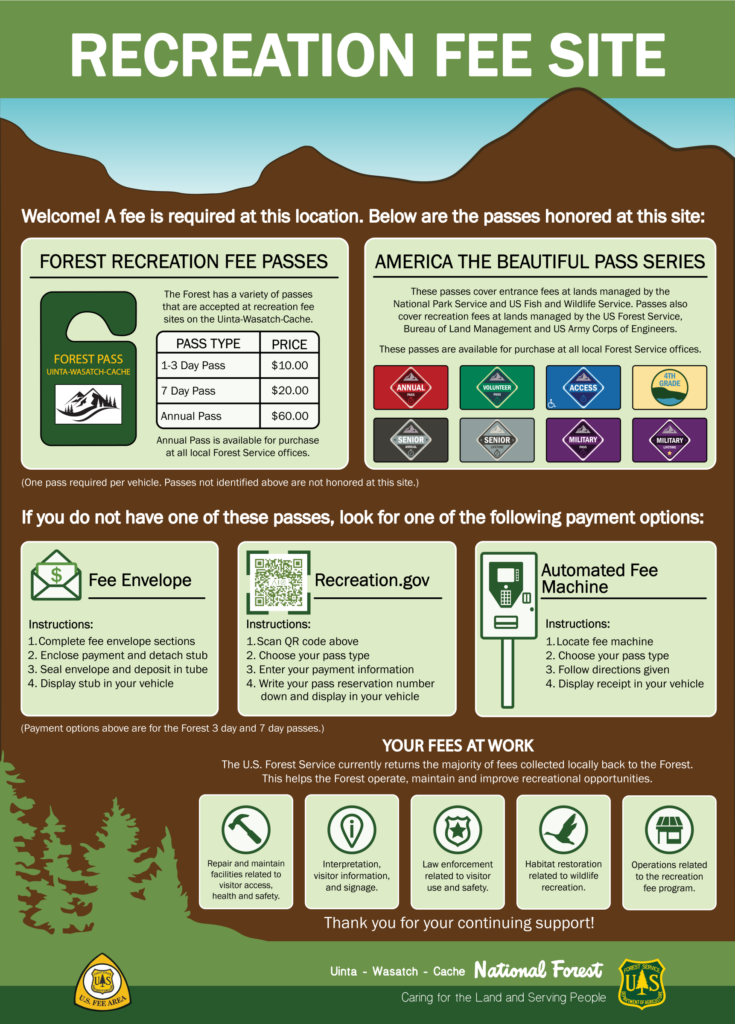
Many popular recreation sites fall within Forest Service Recreation Enhancement Act (REA) fee areas. Fees are charged per vehicle (not person) and apply within designated REA zones. For current pricing and maps, visit: https://www.fs.usda.gov/r04/uinta-wasatch-cache/passes.
If you’re parking within one of these designated zones, you’ll need a valid pass. Read on for the REA locations in the Cottonwood Canyons.
In total, there are seven REA locations in the Cottonwood Canyons.
Big Cottonwood Canyon
- Mill B / S-Curves > summer-only fee area
- Hiking and rock climbing
- Cardiff Fork / Donut Falls (both sides of the road) > summer-only fee area
- Hiking, mountain biking, backcountry skiing, and snowshoeing.
- Silver Lake Recreation Complex > year-round REA fee area
- Accessible boardwalk, hiking, picnicking, cross-country skiing, snowshoeing, and winter walking
Little Cottonwood Canyon
- Grit Mill Trailhead > year-round REA fee area
- Hiking, rock climbing, and bouldering
- White Pine Trailhead > year-round REA fee area
- Hiking, rock climbing, backcountry skiing, and snowshoeing
How much does it cost to park in a REA area in the Cottonwood Canyons?
Starting on June 1, 2026 REA fees in the Cottonwood Canyons are:
- $10 – 3-day pass
- $20 – 7-day pass
- $60 – Uinta-Wasatch-Cache Annual Pass
- $80 – America the Beautiful Pass
👉For more information about REA fees in the Cottonwood Canyons check out our blog: What you need to know about Forest Service Recreation Enhancement Act (REA) Fee Areas in the Cottonwood Canyons
Can I Park on the Side of the Road?
Yes—but only in designated areas.
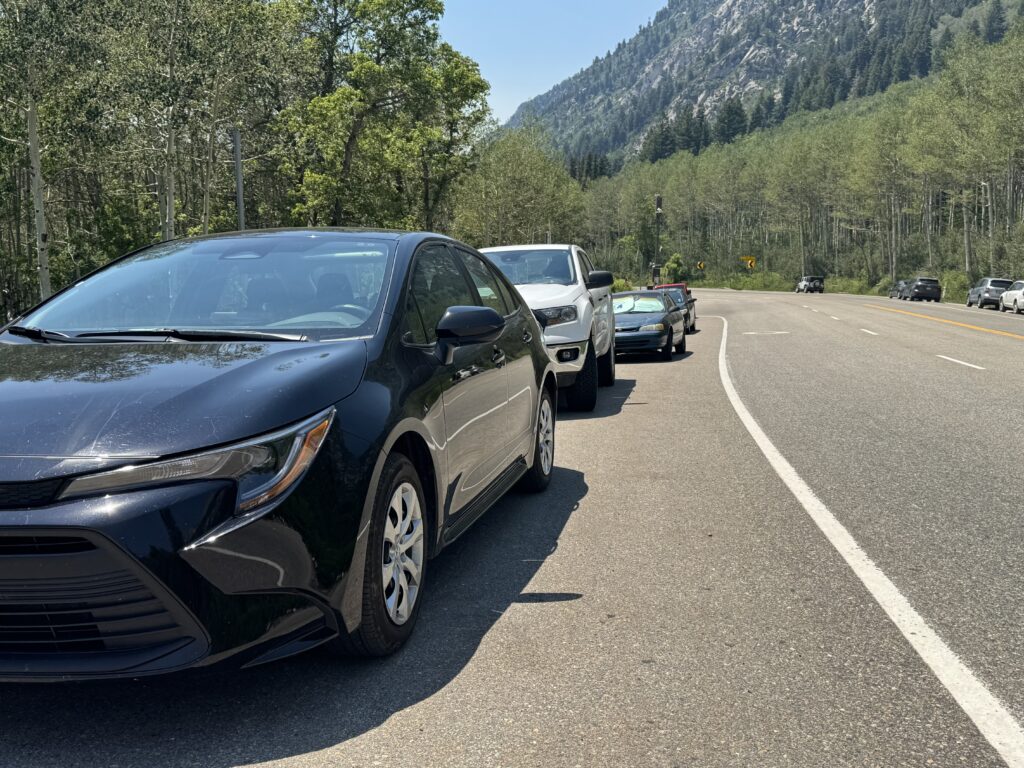
Roadside parking is available along portions of both SR-190 in Big Cottonwood Canyon and SR-210 in Little Cottonwood Canyon. However, parking restrictions vary by location, and enforcement is active throughout the summer season.
Before You Park
- Park completely to the right of the white line.
- Follow all posted signs and restrictions.
- Do not block traffic, trailhead access, gates, or emergency access routes.
- Only park in areas where roadside parking is permitted.
Town of Brighton Parking
Roadside parking is managed by the Town of Brighton along SR-190 in Big Cottonwood Canyon, from approximately ¼ mile above Willow Heights Trailhead to the Guardsman Pass Road intersection.
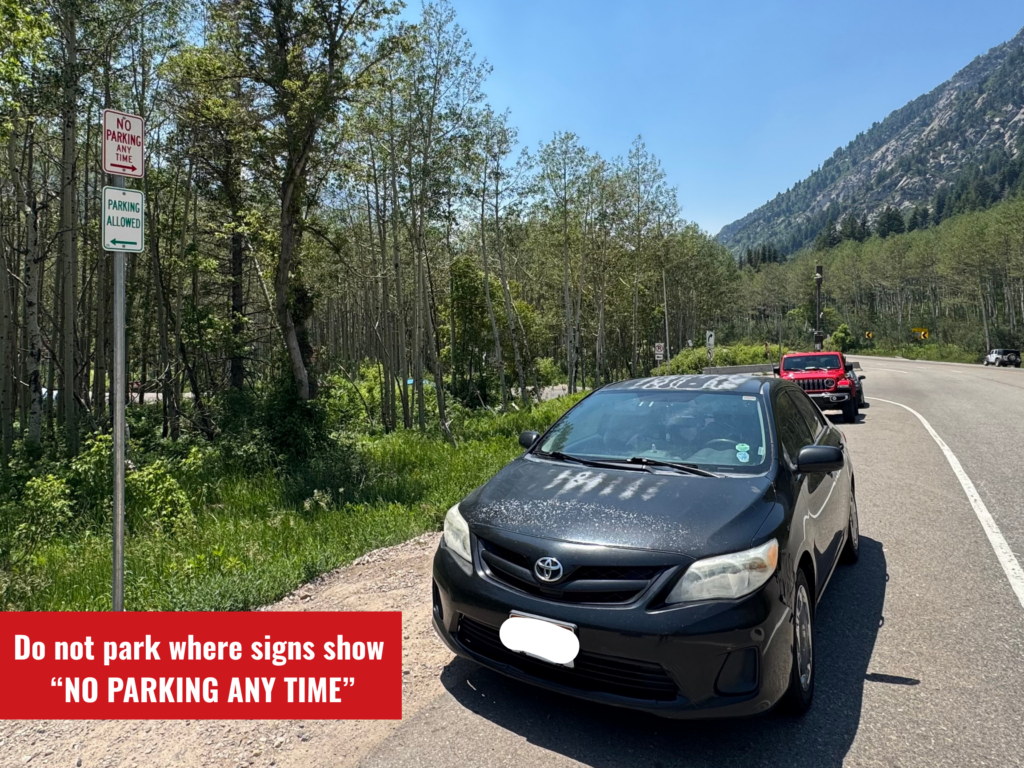
Parking is only permitted in designated areas where signed. The town has identified specific zones where roadside parking is prohibited, and violations may result in a $150 fine issued to the vehicle owner.
Vehicle tires must be parked completely to the right of the white line. You may receive a citation if any part of your vehicle is in the travel lane.
There is no overnight roadside parking permitted from 12 a.m. to 7 a.m.
Before your next trip, read a summary of parking rules and maps on our Travel Resources page or visit the Town of Brighton website.
Guardsman Pass / Blood Lake
The Bloods Lake Trailhead is located along Guardsman Pass Road and provides access to Bloods Lake, Bonanza Flat, and surrounding trail systems. Parking is available in the designated Bloods Lake Trailhead parking lot.
Parking fees apply at the Bloods Lake Trailhead during peak hours. Rates are $5 per hour on weekdays and $8 per hour on weekends and holidays from 8 a.m. to 4 p.m. Parking is free from 4 p.m. to 8 a.m.
Roadside parking is not allowed outside of designated parking areas. If the Bloods Lake Trailhead parking lot is full, do not park along the road or shoulder.
👉Vehicles parked in restricted areas (like the road shoulders) may receive a citation.
Town of Alta Parking
The Town of Alta manages roadside parking along SR-210 in Little Cottonwood Canyon between Our Lady of the Snows and Grizzly Gulch.
Observe posted signs and parking restrictions to avoid a ticket. It is illegal to:
- Leave a vehicle in areas marked “No Parking” or where roadside parking is not permitted
- Leave a vehicle unattended in a manner that obstructs traffic
Parking regulations are enforced, and restrictions may vary by location and time of day.
👉Avoid getting a ticket: Read a summary of parking rules and maps on our Travel Resources page or visit the Town of Alta website for official updates.
Is There a Shuttle or Public Transit Alternative?
For most summer visitors, the answer is no.
Unlike winter, when the Utah Transit Authority’s (UTA) operates seasonal ski bus service to Big and Little Cottonwood Canyon, there is currently no regular public transit service to most summer recreation destinations in the Cottonwood Canyons. UTA’s ski bus service operates during the winter season and ends in the spring.
There is no summer trailhead service at this time and visitors planning summer hikes will need to drive and carpool to trailheads in either canyon.
However, a few seasonal shuttle services are available for specific destinations and events.
Snowbird Oktoberfest Shuttle
Visitors attending Snowbird’s Oktoberfest can take advantage of a free weekend shuttle service offered by Snowbird during the festival season.
The shuttle operates on Saturdays, Sundays, and Labor Day from August through October and is intended specifically for Oktoberfest attendees.
👉It is not a general transportation service for canyon recreation.
Bloods Lake and Bonanza Flat Transit Service
If you’re visiting the Guardsman Pass area, there are two seasonal transit options to the Bloods Lake and Bonanza Flat trailheads, depending on where you’re traveling from.
Utah Open Lands Shuttle
Visitors coming from the Salt Lake Valley can take advantage of the free Utah Open Lands Shuttle. The shuttle operates on Saturdays and Sundays from July 18 through September 27 between 7:30 a.m. and 4:30 p.m. from the Big Cottonwood Canyon Park & Ride. Service is free and available on a first-come, first-served basis.
This shuttle only serves the Bloods Lake and Bonanza Flat recreation area and does not provide transportation to other destinations in Big or Little Cottonwood Canyon.
👉 If you’re using the Utah Open Lands Shuttle, plan your hike or bike ride so you return in time for the final shuttle departing Bonanza Flat at 3:30 p.m.
Park City Transit
If you’re visiting the Guardsman Pass area, Park City Transit offers seasonal service to the Bloods Lake and Bonanza Flat trailheads via its Purple Route. Starting July 3, the new purple line extension will start running on Friday, Saturday and Sunday.
This service replaced the former Transit to Trails program and provides a car-free option for visitors recreating in the Bonanza Flat area. However, it does not serve any other destinations in Big or Little Cottonwood Canyon.
Park City Transit allows dogs, but visitors bringing their four-legged trail buddies should be aware that:
- Dogs are allowed on the trail but they are not allowed at Bloods Lake or within 100 feet of the shoreline.
- Dogs are not allowed anywhere in Big or Little Cottonwood Canyons due to Salt Lake City watershed regulations.
👉If you’re using the Purple Route, plan your hikes and bike rides so end up where you were dropped off. Otherwise, you’ll need to arrange for a shuttle or park a vehicle at your end point.
Where Can I Park Overnight in the Cottonwood Canyons?
Overnight parking is allowed in some locations, but overnight parking and overnight camping are not the same thing.
What Counts as Overnight Parking?
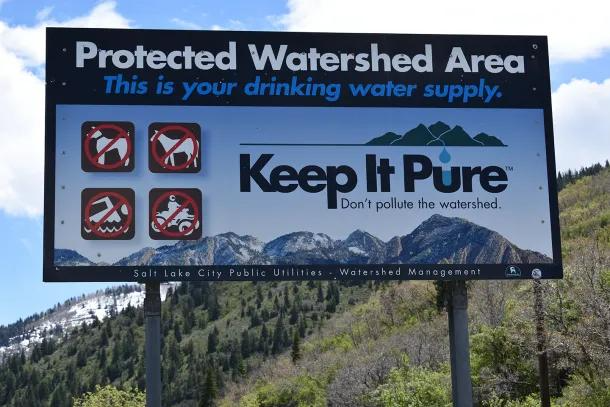
Due to watershed protection regulations, camping or sleeping in a vehicle is prohibited within one-half mile of any roadway in the Cottonwood Canyons except in designated campgrounds.
Overnight parking means leaving your vehicle parked while you’re:
- Backpacking or in the backcountry
- Staying in a lodge or campground
Overnight parking does not mean sleeping in your car. You can leave your vehicle parked if you’re camping in the backcountry and staying at a designated campground but you can’t sleep in it.
Where You Can Stay Overnight
Developed Campgrounds (Forest Service) Locations:
Developed campgrounds are designated camping areas with established amenities such as campsites, restrooms, and other facilities managed by the Forest Service.
Big Cottonwood Canyon
- Spruces Campground
- Jordan Pines Campground
- Redman Campground
Little Cottonwood Canyon
- Tanners Flat Campground
- Albion Basin Campground
👉Don’t forget: Campgrounds are seasonal, often require reservations, and can fill quickly during summer weekends. Check in with the Uinta-Wasatch-Cache Salt Lake Ranger District for more information.
Trailhead Overnight Parking
Some trailheads allow overnight parking for backcountry users.
If you’re leaving your vehicle overnight:
- Check posted signs before parking.
- Follow all trailhead-specific restrictions.
- Do not camp or sleep in your vehicle.
- Be prepared for regulations to vary by location.
Share: